
7-Day Sri Lanka Itinerary: A Day-by-Day Route for Planning Your Own Trip
Plan your own 7-day Sri Lanka trip: Sigiriya, Kandy, Nuwara Eliya, Ella, Mirissa, Galle. Real drive times, day by day.
Quick Overview
- Seven days covers Sri Lanka's four defining travel zones, the Cultural Triangle, the hill country, and the south coast, without retracing ground or rushing.
- The route runs north from the airport to Sigiriya, west to Kandy, up into the highlands at Nuwara Eliya and Ella, then south along the coast through Mirissa to Galle.
- What you do on arrival day depends on when you land: daytime arrivals drive straight to Sigiriya and use the evening to rest, positioning you for a pre-sunrise climb, the best conditions on the rock fortress. Late-night arrivals are better off resting near the airport in Negombo first, then continuing to Sigiriya the next morning.
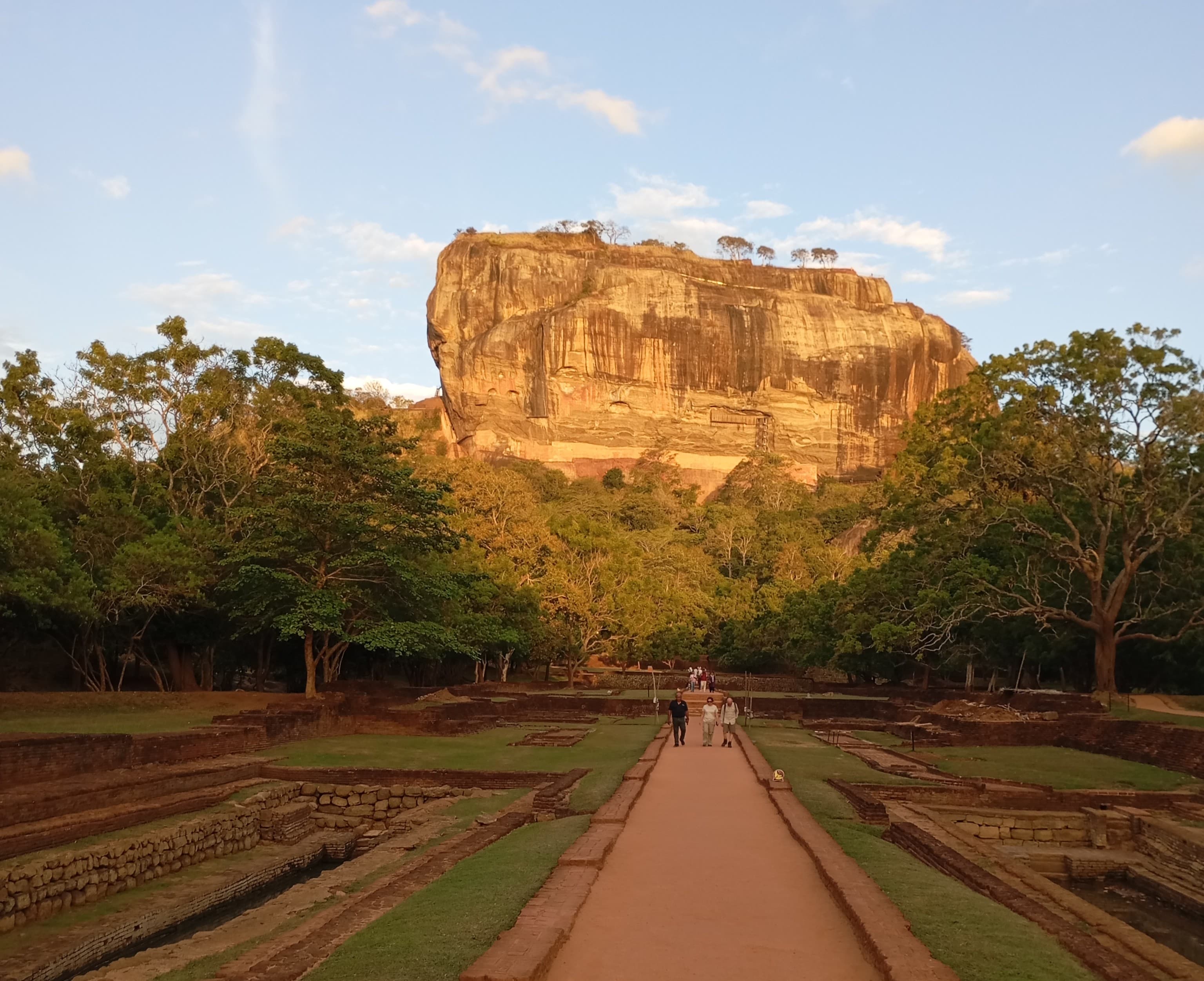
- Sigiriya Rock Fortress is best experienced in the first light of dawn: the ascent takes 45-75 minutes and the summit plateau, a 5th-century palace ruin is at its most extraordinary in the hour after sunrise.
- Nuwara Eliya (1,868 m) and Ella (approximately 1,000 m) are distinct destinations on different roads from Kandy; this itinerary includes both because each offers something the other does not.
- Private transport is the practical backbone for this route; the Ella train is a wonderful experience for that single leg if booked a month in advance, but the full loop cannot be assembled reliably by public transport alone.
What a Seven-Day Sri Lanka Route Actually Means
A seven-day itinerary in Sri Lanka is not a shortcut. It is a deliberate route that trades depth at each location for breadth across the island's defining landscapes: ancient plateau, Buddhist cultural capital, highland tea country, and beach coastline.
The country is small, roughly 430 km north to south but travel times rarely reflect that. Mountain roads curve sharply, coastal roads carry heavy freight, and the famous Kandy-to-Ella train runs on a single timetable that books out weeks in advance. A traveller who plans for distances alone will arrive consistently later than expected.
The route described here does not treat Colombo as a destination. Arrival day is a travel day, and where you spend that first night depends on when your flight lands: daytime arrivals go straight to Sigiriya, arriving in the evening to rest and buying an early morning on the rock fortress the best possible start to the island. Late-night arrivals are better off resting near the airport, in Negombo, and covering the same ground to Sigiriya the following morning instead of driving mountain roads at night.
Route Framework at a Glance
| Day | Origin | Destination | Distance (approx.) | Drive Time (approx.) |
|---|---|---|---|---|
| 1 | Bandaranaike Airport | Sigiriya area (or Negombo, if landing late/at night — see Day 1) | 170-190 km | 3-4 hrs |
| 2 | Sigiriya | Kandy (via Matale) | 95-110 km | 2.5-3.5 hrs |
| 3 | Kandy | Nuwara Eliya | 75-80 km | 2.5-3 hrs |
| 4 | Nuwara Eliya | Ella | 80-90 km | 2.5-3.5 hrs |
| 5 | Ella | Ella (day stays) | — | — |
| 6 | Ella | Mirissa | 180-200 km | 4-5 hrs |
| 7 | Mirissa | Galle then Airport | 37 km + 130-140 km | 45 min + 2.5-3.5 hrs |
Total inter-city road distance: approximately 800-900 km.
Day 1: Airport Arrival - Sigiriya or Negombo, Depending on When You Land
Primary activity: airport transfer, either direct to Sigiriya or to Negombo, depending on arrival time. Evening check-in, rest.
Where you spend the first night is the most consequential decision in this itinerary, and it hinges on one fact: what time your flight lands at Bandaranaike International Airport.
Landing during the day, morning through early evening. Rather than absorbing that arrival time in Colombo a city worth visiting on the way home, drive directly north to Sigiriya. The journey covers 170-190 km and takes three to four hours depending on traffic leaving the airport and road conditions through Kurunegala. Arriving in the Sigiriya area by evening, you check in, eat, and sleep early. There is nothing to see at night at Sigiriya. That is the point: the rock fortress is the first thing you do the next morning, before the sun rises. This is the path that earns the pre-sunrise climb described in Day 2 early morning, not mid-morning.
Landing late evening or at night. Do not put three to four hours of mountain-adjacent driving on tired eyes after a long-haul overnight flight. Stay your first night near the airport instead Negombo, 10-15 minutes from Bandaranaike, has a full range of accommodation and gets you into a bed within the hour of clearing immigration. Depart for Sigiriya the following morning; it is the same 170-190 km, three-to-four-hour drive, arriving by late morning. You will trade the pre-sunrise climb for a later one that same day, but a later, unhurried climb beats a night drive on unfamiliar roads and it is still a better outcome than the overnighting in Colombo, which adds city traffic without solving the fatigue problem.
Arranging your airport transfer before departure to Sigiriya or to Negombo means the driver is confirmed, the vehicle is known, and the price is agreed in advance no negotiation on arrival when tired and with luggage. From the airport-to-Sigiriya transfer, add your flight number in the booking notes so your driver can plan around your arrival time; standard waiting time is covered in the all-inclusive offer.
Driving context: BIA to Sigiriya area, approximately 170-190 km, three to four hours, for daytime arrivals. Late/night arrivals: BIA to Negombo, about 15 minutes, then Negombo to Sigiriya the next morning, the same 170-190 km. Book the transfer before you fly either way.
Day 2: Sigiriya Before Sunrise - Then Kandy via Matale
Primary activity: pre-sunrise Sigiriya climb, Dambulla Cave Temple, afternoon drive to Kandy with Matale stops.
Wake before dawn. The gates at Sigiriya open at 7:00 a.m., and arriving at opening puts you on the ascent in near-darkness, reaching the summit plateau as the sun clears the horizon. The views at that hour — across the forested plain with mist still sitting in the low ground — are different in kind from what midday visitors experience. The rock gets busy; the early morning does not.
The fortress itself is a 5th-century palace built by King Kashyapa on a monolithic granite column rising 200 metres above the surrounding jungle. The ascent takes most people 45-75 minutes each way. Partway up, a metal gallery shelters the famous Sigiriya frescoes: ancient paintings of women that have survived exposed on open rock for fifteen centuries. The summit plateau holds the ruins of pools, gardens, and foundations where a functioning royal complex once stood. Allow two and a half to three hours from base to base.
From Sigiriya, the day's second destination is Dambulla Cave Temple, 20 km south. The cave complex sits at the base of a different rock outcrop; the five caves hold painted ceiling murals and hundreds of seated Buddha images accumulated across fifteen centuries of continuous use. Allow 90 minutes. Visit Dambulla after Sigiriya — Sigiriya in the early morning is the correct sequence.
The Sigiriya-Dambulla corridor is one of the most frequently transferred legs in the Cultural Triangle.
After Dambulla, the drive to Kandy runs south through Matale — and that road carries two stops worth making.
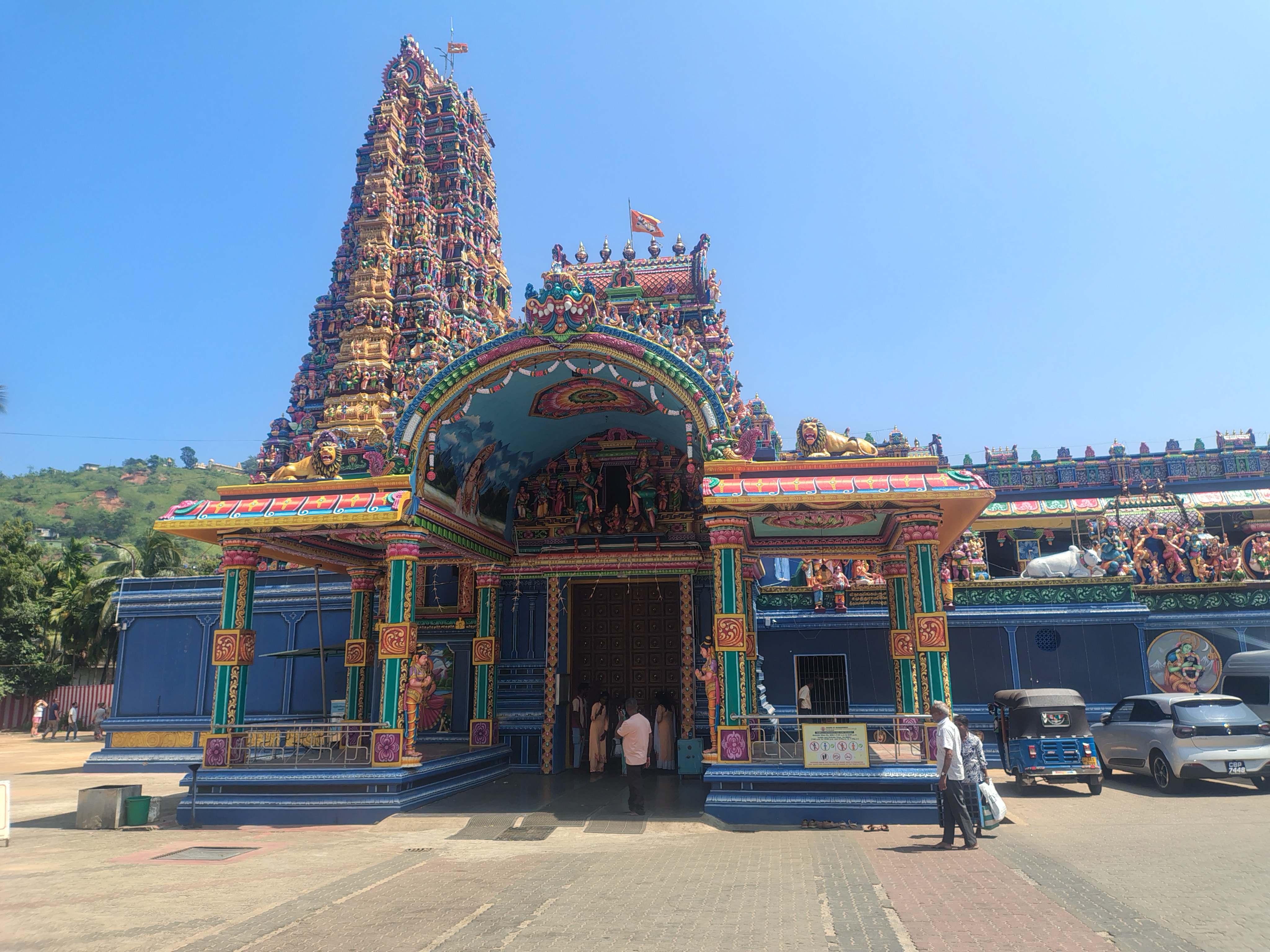
Sri Muthumariamman Temple, Matale. A vivid Dravidian Hindu temple on the main road through Matale town, its gopuram tower covered in painted sculptural figures. This is not a detour; it sits on the route. A 20-minute stop is sufficient to appreciate the detail and walk the outer courtyard.
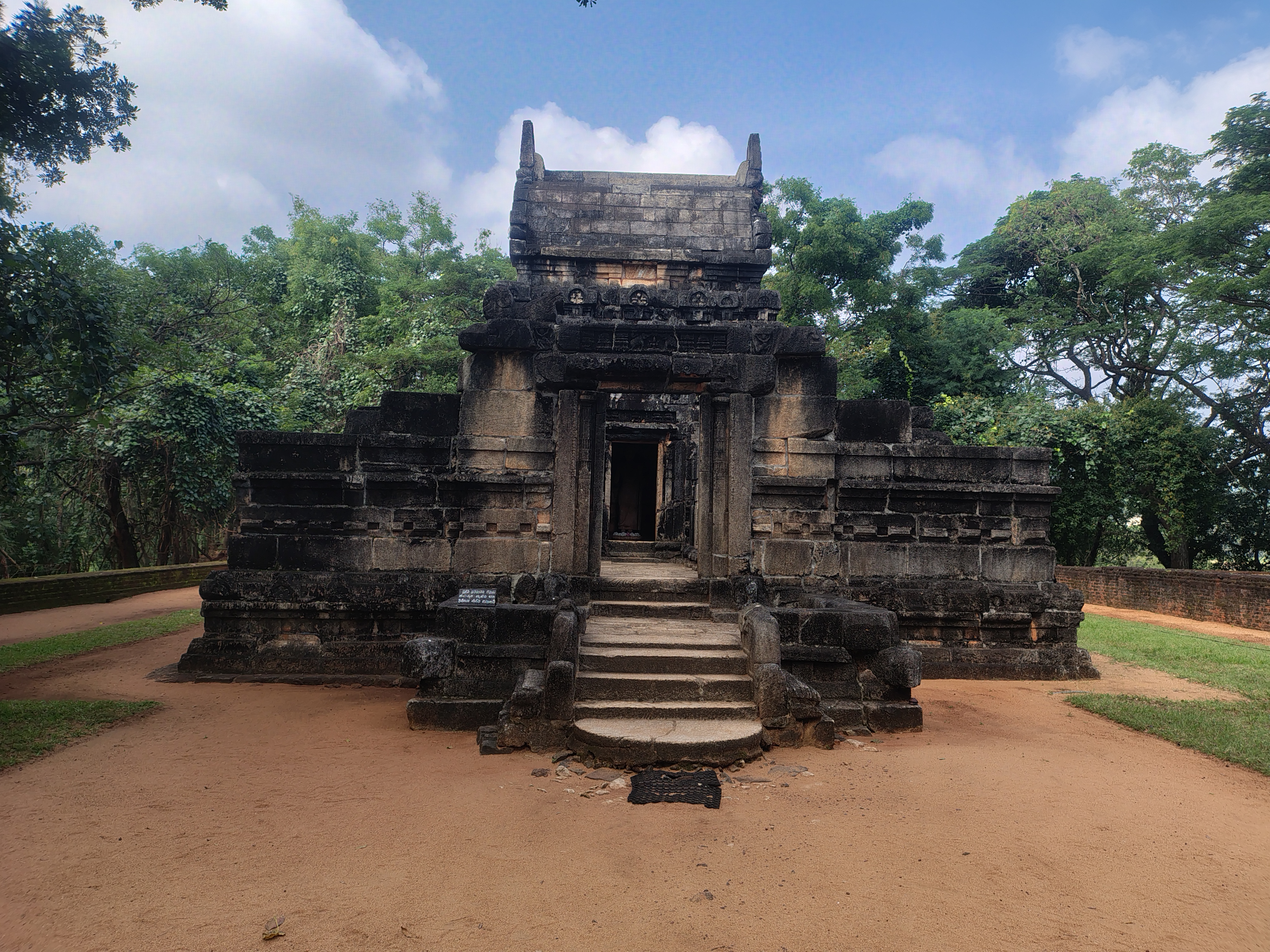
Nalanda Gedige. A few kilometres south of Matale, down a short turn-off, stands a 7th-8th century stone structure that fuses Hindu and Buddhist architectural forms in a way found nowhere else in Sri Lanka. It is architecturally distinctive, historically significant, and almost never crowded. Allow 30-45 minutes.
Both stops are confirmed waypoints on this leg and add genuine texture to the drive without extending the day's total distance meaningfully.
Arriving in Kandy by late afternoon leaves time to settle in before the evening. The Temple of the Tooth Relic — Sri Dalada Maligawa — is open to visitors and worth a brief walk through the complex before dinner.
Stay overnight in Kandy.
Driving context: Sigiriya to Kandy via Matale, approximately 95-110 km, two and a half to three and a half hours including stops. See the Colombo-Kandy route page for transfer context if approaching Kandy from the airport on a different schedule.
Day 3: Kandy to Nuwara Eliya
Primary activity: Temple of the Tooth Relic, Peradeniya Botanical Gardens, then the mountain drive to Nuwara Eliya.
Start the morning in Kandy. The Temple of the Tooth Relic (Sri Dalada Maligawa) is the most significant Buddhist site in Sri Lanka: the repository of a sacred tooth relic of the Buddha, housed in a gilded chamber approached through a sequence of courtyards on the edge of Kandy Lake. Allow 60-90 minutes. A puja (offering ceremony) takes place several times daily; timing your visit around the morning puja adds context.
Peradeniya Royal Botanical Gardens, 6 km from the city centre, holds one of the finest tropical plant collections in Asia — a 147-acre formal garden with an avenue of royal palms, a giant Java fig tree, and orchid houses. Allow 90 minutes to two hours.
The drive from Kandy to Nuwara Eliya climbs from approximately 500 m to 1,868 m along a road that passes through tea estate after tea estate — the landscape most travellers picture when they imagine Sri Lanka's highlands. The journey is 75-80 km but takes two and a half to three hours because of mountain switchbacks, estate traffic, and road widths that narrow through the plantation zones.
Nuwara Eliya sits in a bowl of hills at an elevation that makes it noticeably cooler than anywhere else on this route — averaging 16 degrees Celsius at night. If you travel from a consistently warm climate, this is the place where you will want a jacket. The town centre retains colonial-era architecture from its days as a British hill station: the post office, the Grand Hotel, and the Hill Club were all built in that period. Gregory Lake, within walking distance of most accommodation, is a pleasant evening circuit.
If cool, misty highland air is not a novelty for you and you would rather spend that night going deeper into the Cultural Triangle, the Nuwara Eliya overnight can be traded for an extra night around Sigiriya and Dambulla instead. This itinerary leads with Nuwara Eliya because the highland climate is a genuine draw for most travellers making this specific trip.
Stay overnight in Nuwara Eliya.
Driving context: Kandy to Nuwara Eliya, approximately 75-80 km, two and a half to three hours.
Day 4: Nuwara Eliya to Ella
Primary activity: morning in Nuwara Eliya, then the drive down through the tea estates to Ella.
The morning in Nuwara Eliya is worth using before departure. Mackwoods Labookellie Tea Estate, on the road toward Ella, offers a working factory tour and a tea tasting on a plantation terrace above the valley. It sits directly on the route — not a detour. The factory is operational most mornings; the tour runs 30-40 minutes.
The drive from Nuwara Eliya to Ella covers 80-90 km but takes two and a half to three and a half hours. The road descends from high alpine terrain through lower tea estates and into the warmer, greener hill country around Ella, passing viewpoints over the valley system that separates the two zones.
A note on geography that causes consistent confusion: Nuwara Eliya and Ella are not the same place or a single "hill country" stop. They sit on different roads from Kandy, at different elevations, with different characters. Travellers who assume they are adjacent consistently find themselves choosing one over the other on a tight itinerary. This route allocates a night to each: Nuwara Eliya rewards the highland climate and tea landscape at scale; Ella rewards walks, views, and the Nine Arch Bridge.
Arriving in Ella by early-to-mid afternoon leaves time for Little Adam's Peak before sunset. The 45-minute ascent on a clear path through tea estates gives an unobstructed view of the surrounding valley — one of the better easy hikes on the island.
Stay overnight in Ella.
Driving context: Nuwara Eliya to Ella, approximately 80-90 km, two and a half to three and a half hours.
Day 5: Ella — Full Day
Primary activity: Nine Arch Bridge, Ravana Falls, and the surrounding hill country at pace.
Ella earns a full day, not because it is large but because the surrounding landscape is best explored on foot and without a departure deadline.
The Nine Arch Bridge is a colonial-era viaduct built in brick and cement across a forested valley — no steel was used in its construction. The best vantage point requires a 20-minute walk from the road; the best photographs come when a train crosses, which happens several times daily. Ask at your accommodation for the day's schedule the evening before.
Ravana Falls, 6 km from Ella town, is a wide cascade over a sheer cliff face. It carries more water during and just after the monsoon months but is worth the short transfer in any season.
The afternoon suits a slower pace. Ella has good cafes, viewpoints reachable on foot from the main road, and small local markets. This is a day to let the itinerary breathe before the long coastal drive.
Stay overnight in Ella.
Day 6: Ella to Mirissa
Primary activity: the drive south to the coast, arriving at the beach by mid-afternoon.
The drive from Ella to Mirissa covers 180-200 km and takes four to five hours, descending from highland terrain through the lower hill country and onto the coastal plain before joining the Southern Expressway. Leaving Ella by 7:00 a.m. puts you in Mirissa by early afternoon, with the rest of the day on the beach.
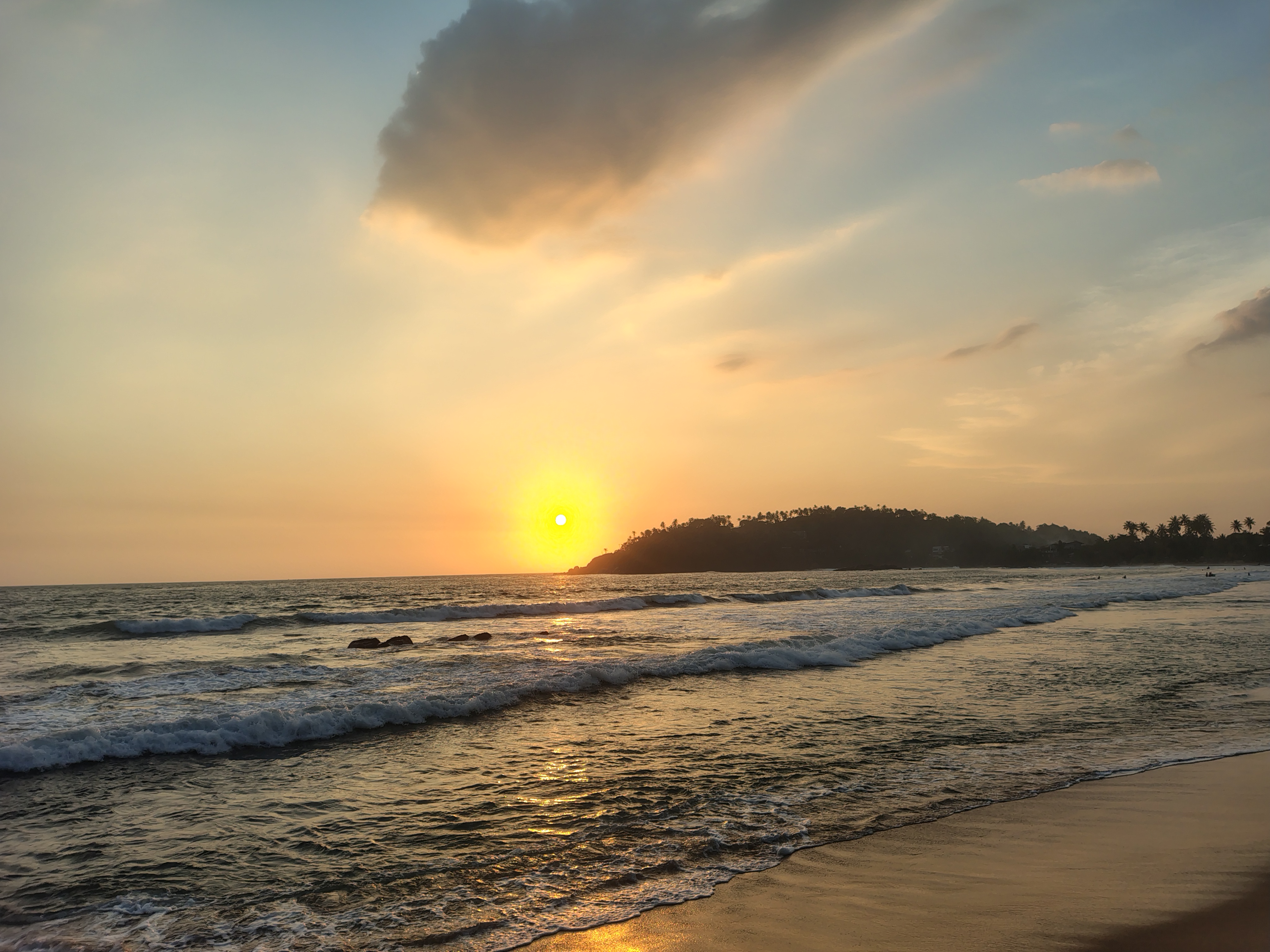
Mirissa's main beach curves around a small headland; the town is built for slow evenings and unhurried mornings. Whale-watching boats depart before dawn between November and April — blue whale sightings peak from December to March. If this falls within your travel window, book the boat in advance through a locally-operated tour rather than on arrival.
The Galle and Southern Coast route covers this coastal corridor in detail, including the Mirissa and Galle leg.
Stay overnight in Mirissa.
Driving context: Ella to Mirissa, approximately 180-200 km, four to five hours. An early start makes the difference.
Day 7: Mirissa to Galle — Then the Airport
Primary activity: Galle Fort in the morning, then the drive north to Colombo and the airport.
Leave Mirissa early enough to spend two to three hours in Galle before the drive north. Galle is 35-40 km west along the coastal road — approximately 45-60 minutes.
Galle Fort is a UNESCO World Heritage Site: a 17th-century Dutch colonial fortification enclosing a functioning town of boutique hotels, restaurants, art galleries, and whitewashed churches. The rampart walk is the best introduction — a circuit of the fort walls takes about 45 minutes and looks out over the Indian Ocean on one side and the old-town rooftops on the other. Allow two to three hours inside the fort.
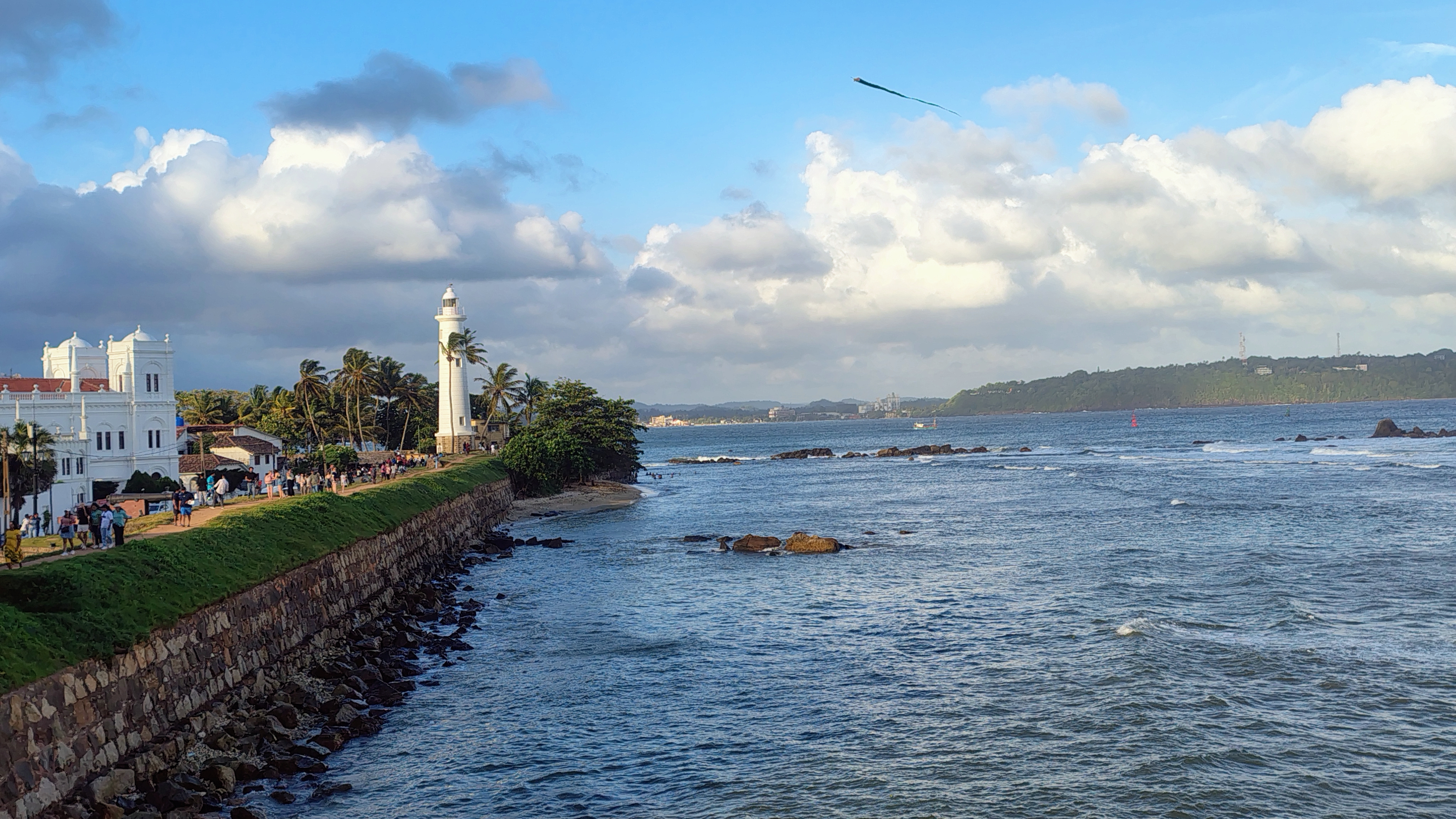
From Galle, the airport is approximately 130-140 km north on the Southern Expressway. The journey takes two and a half to three and a half hours, with city traffic near Colombo adding time on weekday afternoons. Add 45-90 minutes from the city boundary to the terminal.
If your flight departs in the evening, the Galle stop fits comfortably before the airport drive. If it departs mid-afternoon, leave Mirissa by 8:00 a.m. and keep the Galle stop to the rampart walk only.
Driving context: Mirissa to Galle, approximately 37 km, 45-60 minutes. Galle to BIA, approximately 130-140 km, two and a half to three and a half hours.
Private Driver vs. Group Tour: Planning Your Own Pace
The most commonly cited way to do this itinerary is a commercial group-tour package: fixed schedule, shared bus, hotel and activities bundled in. The appeal is clear — one payment, one confirmation, no logistics on the day.
The limitation is equally clear: the schedule is not yours. Every stop is timed for the group, every departure is set the night before, and the pre-sunrise Sigiriya climb — the best possible start to Day 2 — depends on the operator choosing to include it. Most do not, because loading a group bus in the dark for a 6:00 a.m. rock ascent is operationally complex.
A private driver hired for the full seven days changes the equation. Same places. Your wake time, your pace. If you want an hour longer at Nalanda Gedige because the stonework is extraordinary, you take it. If you want to skip Peradeniya on Day 3 and get to Nuwara Eliya earlier, the driver adjusts. The pre-sunrise start at Sigiriya is standard, not a premium.
Multi-day private transport also provides continuity: the same vehicle, the same driver, the same person who knows the route and your pace by Day 3. Add planned stops or specific requests to your journey's special_requests field before booking — drivers see it when preparing their all-inclusive offer and factor it into their price. This is the right place to name early starts, specific waypoints, or any leg where you want extra time. Plan changes in advance and they become part of the agreed arrangement.
For this route — approximately 800-900 km across seven legs — see how multi-day bookings work at rymgo.com/routes/multi-day-island-tour.
What This Route Leaves Out
Seven days is enough for this loop. It is not enough for everything.
The north — Jaffna, Mannar, the ancient city of Anuradhapura — is genuine Sri Lanka and genuinely worth a trip. A seven-day itinerary does not accommodate it without removing at least two stops from this route.
The east coast — Arugam Bay, Trincomalee — requires a separate journey of roughly the same length. It does not combine with the west-and-south loop on a seven-day budget.
The national parks — Yala, Udawalawe — each need a dedicated half-day or full day added to the south coast leg. Yala requires a detour east before Mirissa; Udawalawe sits between Ella and the coast. Either is possible on an extended trip; neither fits this seven-day version without cutting somewhere else.
If seven days is what you have, this route is the right choice. For travellers with ten days or more, a longer itinerary builds from this spine without replacing it.
Rymgo — Verified Private Drivers for This Exact Route
Rymgo is a verified driver marketplace built for independent travellers planning their own Sri Lanka trip. Every driver's licence, vehicle registration, and passenger liability insurance is reviewed before their profile goes live. Post your route request — including multi-day arrangements across the full seven-day loop — and compare all-inclusive offers from available drivers side by side. Payment is held by the platform until your trip is complete.
See how it works at rymgo.com/how-it-works.
FAQ
What is the best 7-day itinerary for Sri Lanka? The most logistically coherent seven-day route runs from Bandaranaike Airport north to Sigiriya, then moves to Kandy via Matale, up through Nuwara Eliya into the highlands, down to Ella, across to the south coast at Mirissa, and returns via Galle to the airport on Day 7. Six overnight stops: Sigiriya, Kandy, Nuwara Eliya, Ella, Mirissa, and a morning in Galle before the airport drive. Skip a Colombo overnight either way — if you land during the day, go directly to Sigiriya; if you land late at night, rest near the airport in Negombo first and continue to Sigiriya the next morning. This sequence covers the Cultural Triangle, highland tea country, and the south coast without doubling back.
Is 7 days enough to see Sri Lanka? Seven days is enough for a first visit covering the island's most significant zones: the Cultural Triangle, the highland tea country, and the south coast. It is not enough to add a Yala safari, the east coast, or the northern ancient cities without cutting something on this route. Travellers who want to include any of those should plan for ten to fourteen days.
Should I spend a night in Colombo at the start? No — but where you do spend it depends on when you land. If you land during the day with enough hours left to make the drive, go directly to Sigiriya; that positions you for a pre-sunrise climb the next morning, the best way to experience the rock fortress, without losing a travel day. If you land late in the evening or at night, skip both Colombo and the night drive to Sigiriya — stay near the airport in Negombo instead, then continue to Sigiriya the following morning. Colombo itself is worth a visit, but it is best seen on the way home when you know the island and have context for what you are looking at.
Should I book a group tour or hire a private driver for a 7-day Sri Lanka trip? A private driver covers the same places at your own pace, with no fixed group schedule and no constraint on early starts. For this itinerary, the pre-sunrise Sigiriya climb on Day 2 is the clearest example: straightforward with a private arrangement, operationally uncommon with a group tour. A verified driver marketplace lets you compare all-inclusive offers from available drivers before committing, with payment held until the trip is complete.
What is the best way to get from the airport to my first stop? Arrange the airport transfer before you fly, and pick the destination based on when you land. Bandaranaike International is 170-190 km from the Sigiriya area — three to four hours — and that is your Day 1 drive if you land during the day. If you land late in the evening or at night, book the shorter transfer to Negombo instead (about 15 minutes from the airport) and make the Sigiriya drive the next morning. Either way, confirm the driver before departure, add your flight number in the booking notes so they can plan around your arrival time, and waiting time is covered in the all-inclusive price. Negotiating a transfer at the airport after a long flight is a poor first decision for an itinerary that requires good logistics throughout.
Should I include Nuwara Eliya in my Sri Lanka itinerary? If cool, misty highland air is a novelty for you — which it is for most travellers making this trip from warm climates — Nuwara Eliya is a genuine highlight worth the overnight. The elevation (1,868 m), the tea landscape, and the colonial hill-station character are distinct from everything else on this route. If highland climate is something you experience regularly at home and you would rather go deeper into the Cultural Triangle instead, trade that night for an extra night around Sigiriya and Dambulla. The route accommodates either choice.
Do I need a different itinerary for 10 days or 2 weeks? A longer trip extends this route without replacing it. Ten days comfortably adds Yala National Park or allows a slower pace with an additional night in each location. Two weeks opens up the east coast or the northern circuit as genuine additions. This seven-day route is the right spine; the extensions build outward from it.
Can I customise this route — swap a stop, add an extra day somewhere? Yes. Add specific requests to your journey's special_requests field before booking. Drivers see it when preparing their offer and can factor it into their all-inclusive price — an extra stop, an early start, or a route variant. Plan the changes in advance and they become part of the agreed arrangement.
Data and Methodology
Sources and research basis
This article draws on the following sources:
- Sri Lanka Tourism Development Authority (SLTDA): Official tourism statistics and site information for Sri Lanka's principal visitor destinations. Current data at sltda.gov.lk.
- Rymgo driver operations data: Internal booking and route data from Rymgo's verified driver network, covering journey times, inter-city distances, and multi-day route patterns across travellers from the UK, Germany, Australia, and India. Includes community discussion on Reddit and independent traveller forums.
- Local route expertise: Day-by-day sequencing, waypoint selection (Sri Muthumariamman Temple and Nalanda Gedige via Matale; tea estate stops on the highland legs), the pre-sunrise Sigiriya recommendation, and the arrival-time-based choice between driving straight to Sigiriya or overnighting near the airport in Negombo reflect on-the-ground route knowledge from drivers operating these legs regularly.
Research notes
Driving distances and journey times reflect real-road conditions on each named leg, not straight-line distances. Mountain road timings vary by season, traffic, and road works; the ranges given accommodate normal variation. Entrance fee amounts for Sigiriya, Dambulla, and other named sites should be confirmed directly with site operators before travel, as they are subject to change.
Conclusion
Seven days in Sri Lanka, structured around the route rather than around individual wishlist items, is a coherent and deeply rewarding first trip.
The decision that most determines whether the itinerary works is the first one: get to Sigiriya as early as your arrival time allows. Land during the day, and you drive there directly, buying a pre-sunrise morning on one of Asia's most extraordinary sites. Land late at night, and the better version of that same decision is resting near the airport in Negombo first, then continuing to Sigiriya the next morning rather than forcing a night drive. Either way, the route is built around good logistics rather than comfortable defaults.
The rest follows from the geography: north to south, highland to coast, each overnight positioned to make the next day's most important experience possible without an early-morning rush to get there. The island is small enough to cover a great deal in a week. The pleasure is in arriving at each place with time to actually be there.
Harinda Danangalage "Hari" founded Rymgo and lives in Sri Lanka. His passion for travel and local culture runs through Rymgo: the idea began on an island off Jaffna, making odiyal kool with locals. He writes these guides to help you plan your own trip, with facts checked and dated.